














If your property is built using materials or construction methods that fall outside standard “brick and mortar with a tile or slate roof”, you may need a non-standard construction home insurance policy. These properties can carry different risk profiles, so insurers often treat them differently and may require specialist cover.
Below, we explain how non-standard home insurance works, what affects the cost, and how to compare tailored quotes.
What is non-standard construction insurance?
Non-standard home insurance is designed for properties that are not built using traditional materials. This can include homes constructed with timber frames, steel frames, concrete panels, thatched roofs, or other specialist building methods.
Because these homes can be more expensive or complex to repair, insurers may apply stricter underwriting criteria or offer cover through specialist providers.
Can you get home insurance on a non-standard construction property?
Yes, you can insure a non-standard construction home, although it usually requires a specialist insurer or a bespoke policy. This is because properties built using non-standard methods are often considered higher risk due to differences in materials, design, maintenance requirements, or repair complexity.
Examples of non-standard construction properties can include:
- Timber or steel-framed homes
- Prefabricated (prefab) houses
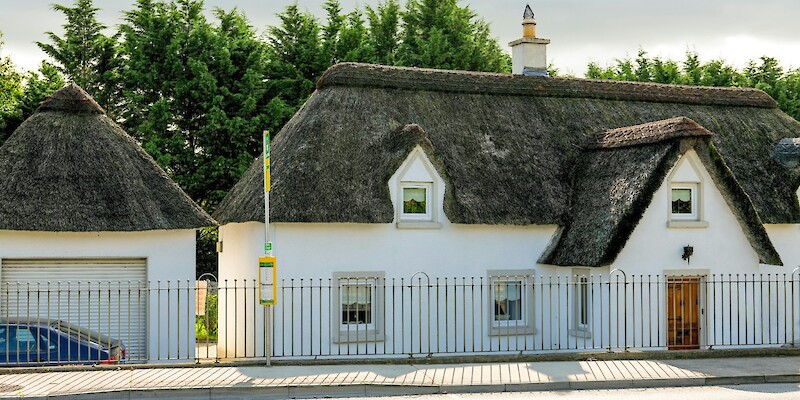
- Thatched roof properties
- Listed buildings
- Homes with flat roofs covering a significant portion (often 25% or more)
- Properties with glass, metal, or mixed-material external walls
These types of construction can affect long-term performance, including insulation efficiency, fire resistance, and weather durability. As a result, standard insurers may find it more difficult to accurately assess rebuild costs and potential repair risks.
Non-standard home insurance is designed to address these challenges by offering tailored cover that reflects the specific construction type, ensuring the property is properly protected under a policy suited to its individual characteristics.
How insurers assess applications
Insurers will carry out a more detailed assessment when evaluating a non-standard construction home compared with a traditional property. Several key factors can influence both eligibility and the cost of cover:
- Construction and materials: The specific building methods and materials used throughout the property are closely assessed. Certain features, such as thatched roofs, may present a higher fire risk, while flat roofs can be more vulnerable to water ingress. Insurers will usually require detailed information about the structure.
- Age and condition: Older non-standard homes may be more susceptible to deterioration, particularly if maintenance has been limited. Insurers may request a property survey or evidence of recent renovations. Homes built in certain periods, such as the post-war era, may also be assessed more carefully due to construction methods used at the time.
- Location and exposure to risk: The property’s postcode, as well as its exposure to risks such as flooding or subsidence, will influence premiums. Non-standard properties in high-risk areas may face higher insurance costs.
- Rebuild costs: The cost to rebuild a non-standard property can exceed its market value due to specialist materials, labour, or planning requirements. Insurers will typically require an accurate rebuild cost estimate, often supported by a chartered surveyor.
- Type of insurance and level of cover: Whether you choose buildings insurance alone or a combined buildings and contents policy will affect pricing. Policy limits, exclusions, and the level of voluntary excess selected can also impact the overall premium.
- Occupancy and use: How the property is used is also important. Homes used as holiday lets, second homes, or left unoccupied for extended periods may have different eligibility criteria or higher premiums. Some insurers only cover primary residences, although specialist providers can often accommodate more complex situations.
How to estimate your cover needs
Calculating building insurance cover for a non-standard construction property can be complex, so we recommend speaking to one of our advisers to get a full calculation and quote that's bespoke to your home.
However, you can use our home insurance calculate to get a quick estimate of the total cover you'll need for both your propery, and its contents.
Whether you opt for the full estimate or quick check option on our calculator, you'll be able to download a summary of your estimation to help guide our discussion regarding your bespoke needs.
Average cost of non-standard construction home insurance
Unfortunately, determining average costs for non-standard construction home insurance can vary significantly depending on the specific characteristics of the property. This is because non-standard homes often require bespoke policies or tailored home insurance designed to reflect the individual structure and risk profile.
As a result, premiums are typically calculated on a case-by-case basis, taking into account the property’s construction type, condition, location, and rebuild cost, as well as the level of cover required.
|
Type of non-standard construction |
Average yearly cost |
|
Timber frame |
£288 |
|
Thatched roof |
£1,788 |
|
Prefab house |
£271 |
|
Grade 1 listed building |
£648 |
|
Corrugated iron walls |
£275 |
|
Stone walls |
£211 |
Get a bespoke home insurance quote comparison online
Finding a home insurance quote for a non-standard construction property can often be more challenging than for a traditional home. Many mainstream insurers may not offer cover, and navigating specialist providers can require a more tailored approach.
Our home insurance brokers specialise in sourcing tailored quotes from insurers who understand the complexities of non-standard construction. Whether your property is timber or steel framed, prefabricated, thatched, or has other uncommon features, our advisers can help compare suitable non-standard home insurance options based on your specific requirements.
If you would like a free, no-obligation conversation with an adviser who specialises in non-standard construction home insurance, you can get started here.
Compare UK providers for non-standard home insurance
The best insurer for non-standard construction home insurance will depend on the materials used, your location, the level of cover required, and your individual circumstances.
To give you an idea of some well-known providers that may offer cover for non-standard construction homes:
- NFU Mutual: Known for covering rural and unique properties, including farms, cottages, heritage homes, and listed buildings. This can include properties with thatched roofs, timber frames, or other specialist construction types. Their bespoke home insurance policies often provide comprehensive buildings and contents cover tailored to non-standard homes.
- Admiral: Offers flexible home insurance for certain non-standard features, such as some timber-framed homes, prefab properties, thatched roofs, and listed buildings. Not all non-standard properties are eligible, but where cover is available, discounts may be offered when combined with other insurance products.
- AXA: May provide cover for selected non-standard construction properties, including those with flat roofs or mixed materials such as steel or timber frames. These cases are often subject to individual underwriting assessment.
Because eligibility and pricing vary significantly between insurers, non-standard home insurance is usually assessed on a case-by-case basis. Speaking with a specialist adviser can help ensure your property is matched with a policy that properly reflects its construction type and risk profile.
Frequently Asked Questions
Yes, some insurers do offer cover for non-standard construction holiday homes, although they are typically viewed as higher risk compared with standard residential properties. Because of this, specialist underwriting is often required.
In many cases, you may need a tailored policy that takes into account factors such as:
- Periods when the property is unoccupied
- Holiday letting or short-term rental use
- Seasonal or occasional occupancy
- The specific non-standard construction type of the building
Due to these additional risks, standard home insurance providers may not always offer suitable cover, or may apply restrictions and exclusions.
For this reason, it is often advisable to speak with a broker who understands both holiday home insurance and non-standard construction properties, as they can help identify insurers willing to provide appropriate and fully tailored cover.